
As humans, we feel anxious when we do not know where our next meal is coming from. But there is an all-pervading lack of security because we do not understand the industry and supply chains that deliver the foods we eat to grocery stores or restaurants.
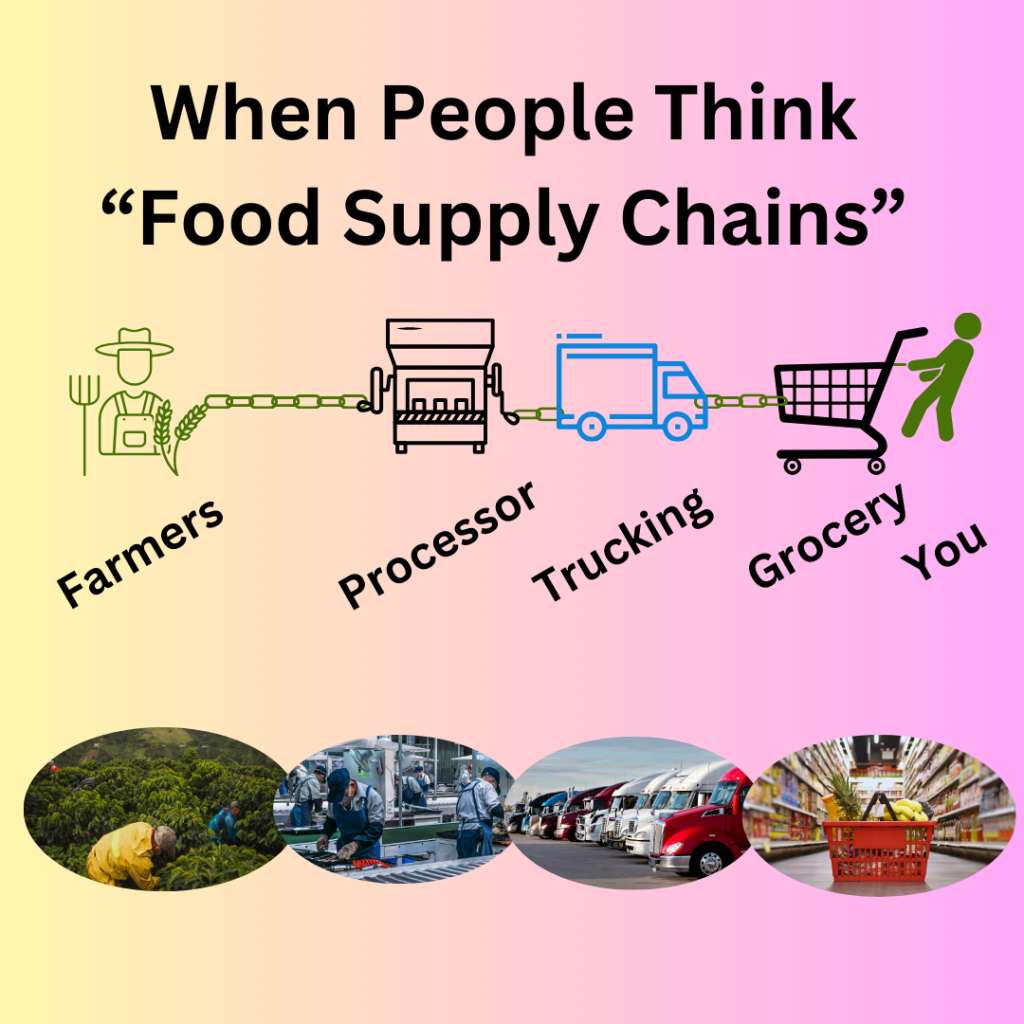
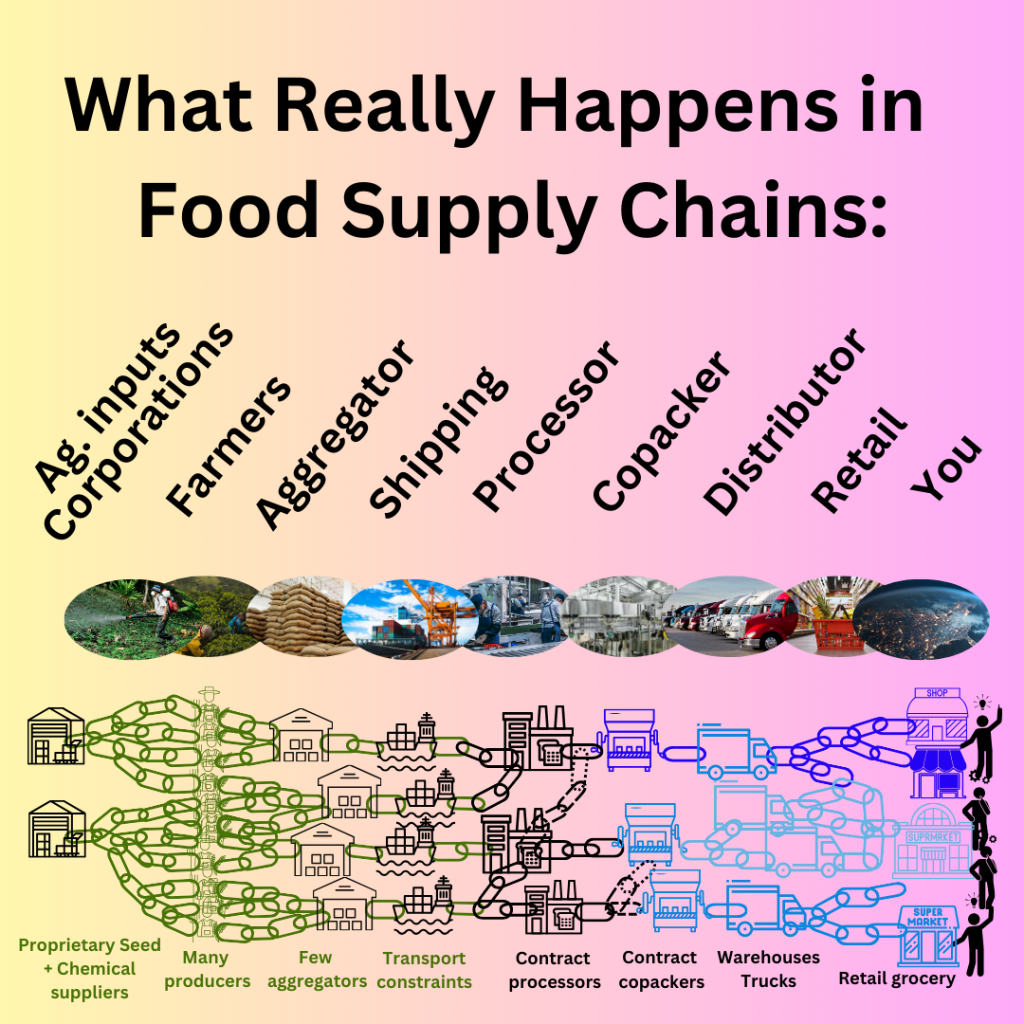
Food System Complexity
Lack of Supply Chain Transparency
Conditions on farms where foods are produced are difficult to determine when many food brands aggregate food goods from multitudes of small farms. The food brands themselves often do not have much oversight over their products’ supply chains because few food brands physically interact with the food goods they produce.
Country of Origin labeling for Produce and Meat
Produce is often labeled with its country of origin, but meat is often unlabeled if the animal was raised in a country other than the United States. The law for labeling meat as “Product of the USA” is just if the animal was slaughtered and processed in the United States, regardless of whether the animal was born, raised and spent the vast majority of its life in another country. As of February 2025, some legislation has been introduced to change that misleading labeling, but it has not yet passed.
Copackers Actually Process and Pack Foods
The food company or brand itself may use a co-packer. Co-packing companies receive the product in bulk and then run the foods through machines that bottle, package, seal and label the foods or cosmetics.
This makes it difficult to know where the food you purchase was actually produced.
Packaging Plant Numbers for Packaged Foods
These codes are usually used for food safety recalls. They can be checked to determine how many different products are produced in the same factory.
For example, dairy processors can be looked up on this website:
Distributors to Grocery Stores
Very few distributors operate to supply foods to grocery stores from major grocery chains to the rare mom-and-pop shop.
Major grocery chains can usually negotiate volume discounts, at the increased expense for larger, more local grocery stores.